
With just a mouse click, you can delight in mega-litters of adorable kitties, admire countless fresh anime characters, or stare into the twinkling eyes of all sorts of beautiful people. The only catch is that they’re all fake. As Synced previously reported, these hyperrealistic images now flooding the Internet come from US chip giant NVIDIA’s StyleGAN, a generative adversarial network based face generator that performs so well that most people can’t distinguish its creations from photos of real people.
Soon after StyleGAN was open-sourced earlier this month, Uber software engineer Philip Wang used the tool to create “This Person Does Not Exist,” a website which generates a new hyperrealistic fake human face every time it’s refreshed. The site quickly went viral and has been covered by major global media. While many comments have praised the realism, more than a few regard the generated faces as a little creepy.

In a Facebook post, Wang says he wanted to “raise some public awareness for this technology,” as StyleGAN represents the current state of the art in generative adversarial networks.
If the synthetic faces have you wondering “Are you sure this is not a real person?” you’re not alone. University of Washington researchers Jevin West and Carl Bergstrom have created the polling site “Which Face is Real?” which aims “to help you spot these fakes at a single glance.” One emerging consensus on the interactive site seems to be that blurry backgrounds, overly smooth skin, and weird ears are signs to look for when identifying fakes.

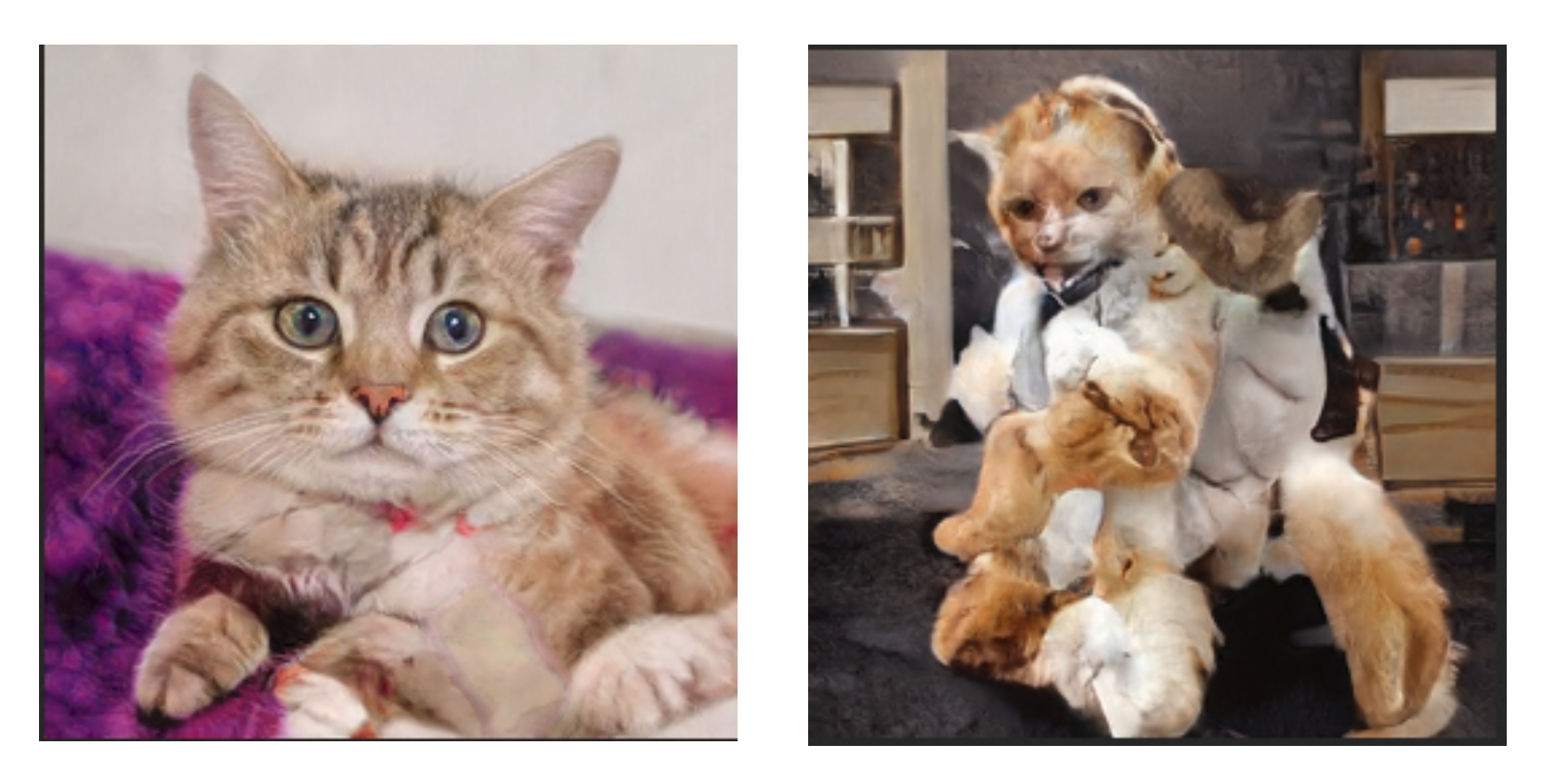
Theoretically, StyleGan is trained to generate human faces, but it can also learn from and work with other image categories. One thing the Internet can’t seem to get enough of is cats, and so by popular demand Wang has added a kittie generator, “This Cat Does Not Exist.” The faux felines will fool most — although there are also some Frankenstein-esque errors.
Hardware Systems Engineer Nathan Glover created a similar website, “These Cats Do Not Exist,” to generate cat images using StyleGAN on AWS SageMaker.
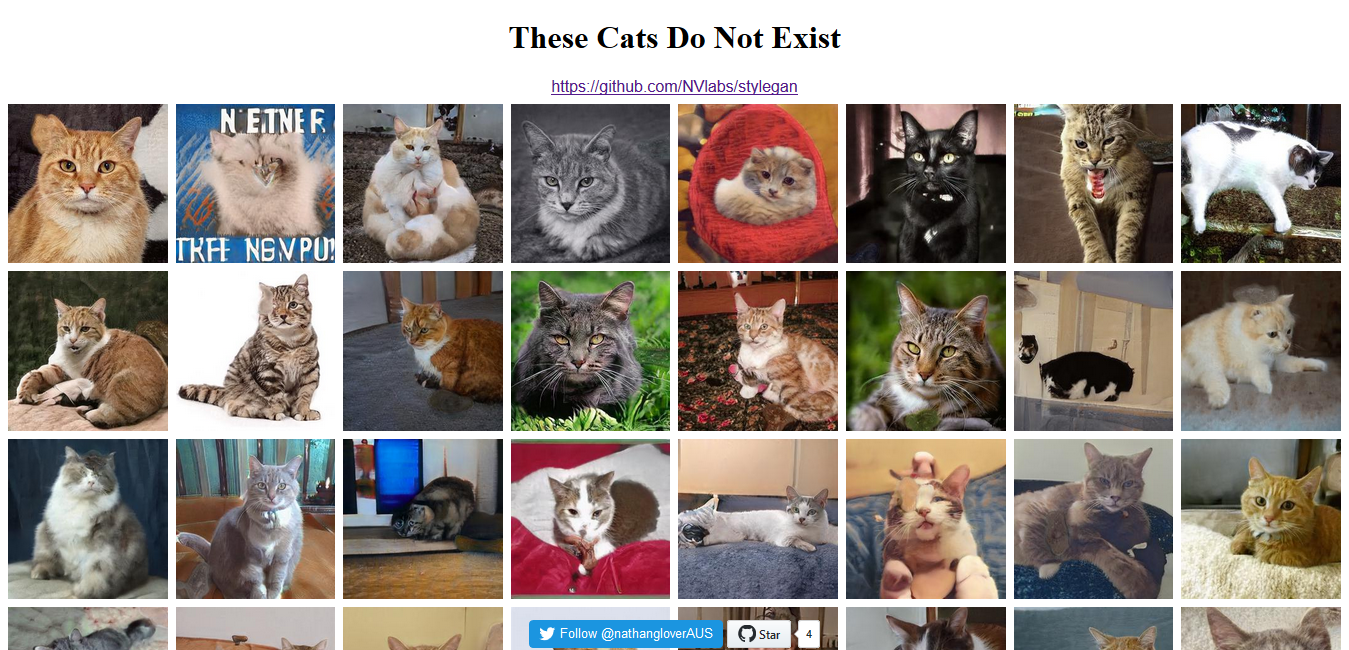
The open-sourcing of StyleGAN has illustrated its incredible flexibility, and researchers are still exploring new image targets.
Another new StyleGAN-driven site is “This Airbnb Does Not Exist,” where every generated accommodation listing includes pictures showing a short-term rental apartment bedroom, kitchen, living room, etc. The listings also display the name and image of the “host” along with machine-generated descriptive texts that generally have a realistic flow, but often turn surreal. Dorien’s listing for a Berlin “cozy private 2-bed apartment with a vintage bush” for example boasts “a private bathroom with another guest room only. I will provide help throughout the yuming getaway. We love online in productive cheerful oasis.”

Google Software Engineer Christopher Schmidt created the fake rental site: “All of the dynamic content on each listing is generated via a series of different machine-learned AI models.” Schmidt used a language model trained on Airbnb listings to create the text, with data from OpenDateSoft’s Airbnb Listings and a model based on TensorFlow’s Predict Shakespeare with Cloud TPUs.
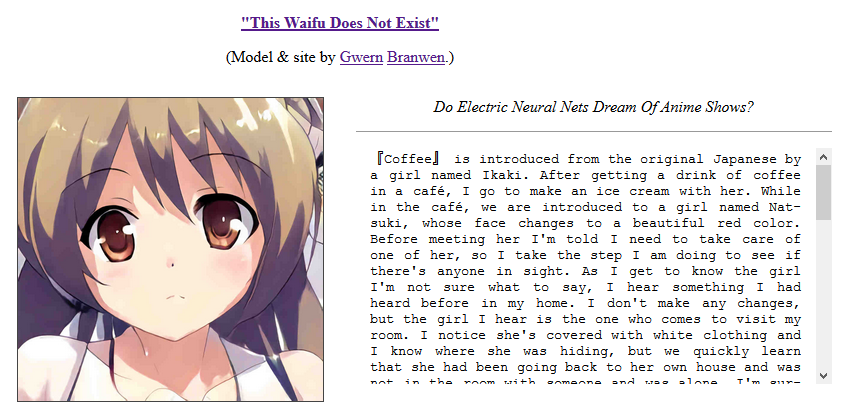
A StyleGAN-based synthetic anime-style female face generator also recently went viral, and its bright and colourful (and royalty-free) anime faces have been popping up everywhere on social media. Independent researcher Gwern Branwen developed “This Waifu Does Not Exist,” a simple static website with 70,000 random StyleGAN faces and 70,000 random GPT-2-small text snippets generated using a random seed 1–70,000 and a long prompt with anime-related words and phrases picked by Branwen.
Although some humans have scored well on fake detection, GANs’ rapidly improving realism has many worried. OpenAI elected not to release the code for their new language model due to concerns about its potential misuse for malicious purposes such as generating fake news. The controversial decision has challenged the AI community’s traditional open-source philosophy.
Concerns regarding malicious use and negative societal impact of generated content may interfere with AI’s long-term development and deployment. It is however also apparent that open-sourced projects like NVIDIA’s StyleGAN can help community researchers achieve state of the art performance in visual processing systems and push neural networks and machine learning to the next level. The tech seems at a crossroads and only time will tell where GANs go next.
Journalist: Fangyu Cai | Editor: Michael Sarazen
2018 Fortune Global 500 Public Company AI Adaptivity Report is out!
Purchase a Kindle-formatted report on Amazon.
Apply for Insight Partner Program to get a complimentary full PDF report.


Follow us on Twitter @Synced_Global for daily AI news!
We know you don’t want to miss any stories. Subscribe to our popular Synced Global AI Weekly to get weekly AI updates.